










Global LED Display Industry – The LED display market is in the midst of a technological evolution, with two advanced technologies—MicroLED and OLED—battling for dominance. Both technologies offer unique advantages, but each comes with its own set of challenges. As the demand for more immersive, high-definition, and energy-efficient displays continues to rise, manufacturers and consumers alike are increasingly looking toward the future of these two display technologies.
MicroLED is an emerging technology that utilizes microscopic-sized LEDs to create individual pixels. This allows for higher resolution, brighter displays, and more energy-efficient screens. Unlike OLED displays, which use organic materials that degrade over time, MicroLED screens have a much longer lifespan and are not susceptible to burn-in issues. Additionally, MicroLED displays have better contrast, brightness, and color accuracy, making them ideal for high-end applications such as large-scale digital signage and high-definition televisions.
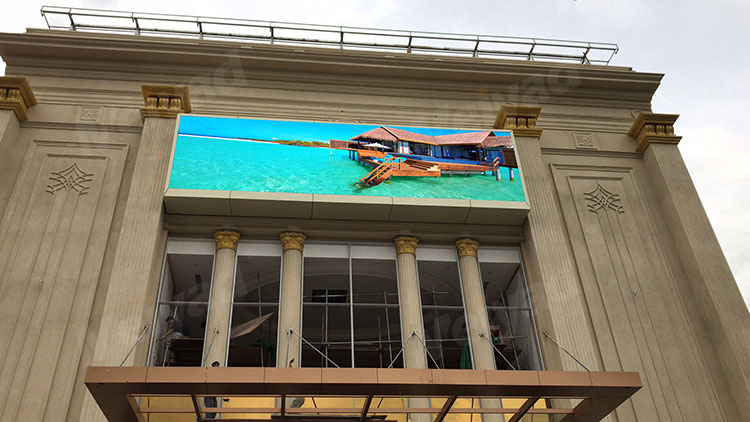
On the other hand, OLED (Organic Light Emitting Diode) technology has been the preferred choice for premium display applications for several years. OLED displays are known for their deep blacks, wide viewing angles, and ultra-thin form factor. The ability to produce true black levels by turning off individual pixels gives OLED displays exceptional contrast ratios, making them perfect for cinematic experiences. However, OLED displays suffer from potential burn-in issues and are generally more expensive to manufacture.
Industry experts highlight that while both technologies have distinct advantages, MicroLED is expected to lead the future of the display market due to its durability and versatility. MicroLED screens can be scaled to any size without a loss of resolution, offering greater flexibility in applications such as digital signage, large stadium screens, and ultra-high-definition televisions. Additionally, their non-organic nature makes them more sustainable and long-lasting compared to OLED.
However, MicroLED is still in its infancy and faces challenges in terms of manufacturing scalability and cost. The production process for MicroLED displays is more complex and time-consuming, which makes them more expensive to produce at scale. Moreover, the technology has yet to be widely adopted for consumer electronics, meaning its true potential has yet to be fully realized in the market.
As for OLED, while it remains the top choice for consumer-grade products like smartphones and TVs, the technology’s limitations, including burn-in and higher production costs, are pushing many manufacturers to invest in MicroLED research and development. In fact, some industry leaders, like Samsung and LG, are already experimenting with combining both technologies to leverage the strengths of each.
Looking ahead, the race between MicroLED and OLED will continue to shape the direction of the LED display industry. With improvements in both technologies and the growing demand for better performance and durability, the future of displays is undoubtedly leaning toward more robust, high-performance solutions.